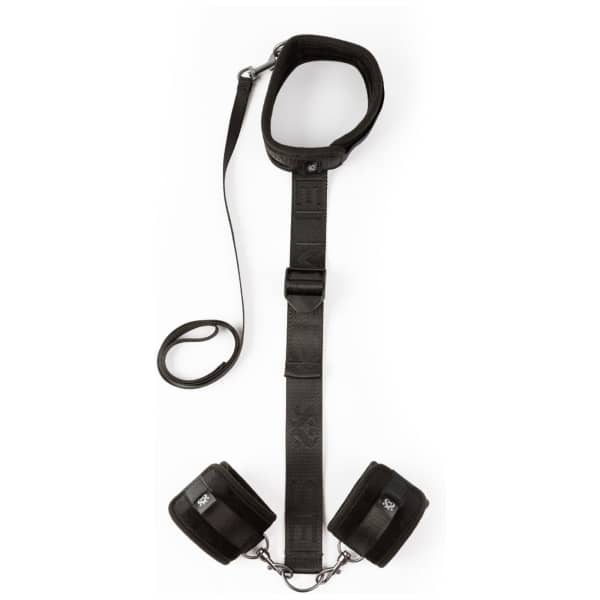


Sei Mio Neck Firmly In Check Adjustable Neck And Wrist Restraint Kit
- Adjustable padded collar and cuffs for custom fit
- Soft padding prevents chafing during extended play
- Quick-release fastenings for immediate safety
- Durable materials built for repeated use
- Designed for confident, comfortable control
Sei Mio Neck Firmly In Check Adjustable Neck And Wrist Restraint Kit
There's something intoxicating about the moment when control shifts — when hands are held just where they should be, when anticipation builds with every adjustment. The Sei Mio Neck Firmly In Check kit brings that moment to life. This neck and wrist restraint system connects padded cuffs to a padded collar, creating a physical and psychological experience of surrender. The adjustable straps let you customise exactly how much restriction feels right, while the thoughtful padding ensures comfort even when the intensity builds.
The black design is clean and focused — no unnecessary embellishments, just functional restraint that looks as deliberate as it feels. Whether you're exploring power dynamics for the first time or adding a new dimension to established play, this kit gives you the freedom to experiment without compromising on safety or comfort.
Intensity & Experience Level
Medium intensity — ideal for curious beginners and experienced players alike.
This restraint kit sits comfortably in the middle ground. It's not so mild that it feels like pretend, but it's not so intense that it intimidates. The adjustability is key here — you can start with loose, symbolic restraint and gradually increase restriction as confidence grows. The connection between neck and wrists creates a very specific posture that heightens vulnerability without requiring complex rigging or suspension knowledge.
First-time users will appreciate how quickly the kit fastens and releases. More experienced players will value the control it offers over positioning — hands can be secured in front for face-to-face intimacy, or behind for a more exposed, submissive position.
Always establish a clear safe-word or non-verbal signal before use. The fastenings are designed for quick release, but communication is still your primary safety mechanism.
Material & Quality
The collar and wrist cuffs are lined with soft padding that distributes pressure evenly across the skin. This prevents the sharp pinching or chafing that can happen with unpadded restraints, especially during longer sessions. The outer material is durable synthetic — chosen for its ability to withstand repeated use and the occasional tug of resistance.
The connecting straps are reinforced where they attach to the collar and cuffs. These junction points take the most stress during play, and the stitching is designed to hold firm. The fastenings — whether hook-and-loop or metal buckles — are secure enough to maintain tension but simple enough to release quickly when needed.
This isn't delicate lingerie-style bondage. It's built to be used repeatedly, washed when necessary, and stored without losing shape or function.
Fit & Adjustment
The collar adjusts to fit most neck sizes comfortably. It should feel secure without constricting the throat or pressing against the windpipe — you're aiming for a sensation of gentle restriction around the base of the neck, not choking pressure.
Each wrist cuff adjusts independently, so you can accommodate different wrist sizes or adjust tightness based on how much movement you want to allow. The cuffs should be snug enough that they don't slip off during play, but loose enough that circulation isn't affected. A good test: you should be able to slide one finger between the cuff and skin.
The connecting straps determine hand position and distance from the collar. Shorter strap settings create a more restrictive posture with hands held close to the neck. Longer settings allow more movement while still maintaining the symbolic connection. Experiment with different configurations — the same kit can create very different experiences depending on how it's adjusted.
How to Use It
Start by fitting the collar around the neck. Adjust until it sits comfortably at the base without pressing on the throat. The padding should distribute pressure evenly — if there are any pressure points, readjust slightly.
Fasten the wrist cuffs. Most users prefer to do this before connecting them to the collar, as it's easier to adjust when the hands are still free. Check that both cuffs are secure but not cutting off circulation.
Connect the cuffs to the collar using the attachment straps. Decide whether hands will be positioned in front or behind — this changes the entire dynamic of the restraint. Hands in front allows for more face-to-face interaction and is generally easier for beginners. Hands behind creates a more exposed, vulnerable position.
Before beginning any intense play, test the quick-release mechanism. Make sure both partners know how to unfasten the restraints quickly if needed. Agree on a safe-word — something clear and unambiguous that immediately stops play.
During use, check in regularly. Ask about comfort, circulation, and emotional state. Restraint play affects people differently, and what feels thrilling at first can become uncomfortable quickly. The adjustable design means you can modify restriction mid-session without starting over.
After play, remove the collar first, then the cuffs. Take a moment to reconnect — restraint can be intense emotionally as well as physically, and aftercare matters.
Cleaning & Storage
Wipe down all padded surfaces with a damp cloth and mild soap after use. Pay attention to any areas that contacted skin directly — body oils and sweat can degrade materials over time. Allow everything to air dry completely before storing.
Avoid submerging the restraints in water or putting them in a washing machine unless the care instructions specifically allow it. The padding and stitching can weaken with excessive moisture.
Store the kit laid flat or loosely coiled — don't fold the collar tightly or compress the padding, as this can create permanent creases and reduce comfort. Keep it in a cool, dry place away from direct sunlight, which can fade and weaken synthetic materials.
Check the fastenings and stitching periodically, especially at the attachment points where stress concentrates. If you notice any fraying, loose stitching, or weakened fastenings, repair or replace before use — restraint gear needs to be structurally sound to be safe.